
Habit stacking meaning
Habit stacking means using a habit you already do as the cue for a new behavior. The formula is: “After I [current habit], I will [new habit].” For example: “After I start the coffee maker, I will drink a glass of water.”
What is habit stacking?
Habit stacking means attaching a new habit to a habit you already do every day. Instead of remembering a new behavior from scratch, you let an existing routine trigger it. The term was popularized by James Clear in Atomic Habits, and it builds on a well-studied idea called an implementation intention: a plan that states exactly when and where you will act.
The habit stacking formula
Every habit stack uses one sentence: “After I [current habit], I will [new habit].”
For example: “After I start the coffee maker, I will drink a glass of water.” The first action is stable; the second borrows its cue. Once that pair feels automatic, the new habit can become the cue for the next one: “After I drink my water, I will write tomorrow’s top task.”
How to habit stack in 5 steps
- List your anchors. Write down actions that already happen daily without effort: waking up, brushing your teeth, making coffee, sitting at your desk, eating lunch, closing your laptop.
- Pick one small new habit. Choose something you can finish in two minutes or less at first.
- Match time and place. Pair actions that happen in the same location and at the same moment of the day.
- Write the exact sentence. “After I [current habit], I will [new habit].” Vague cues like “in the morning” rarely work.
- Track it for a week. If you keep forgetting, the cue is unreliable. Move the new habit to a different anchor instead of blaming willpower.
30 habit stacking examples
Morning habit stacks
- After I turn off my alarm, I will open the curtains.
- After I get out of bed, I will make my bed.
- After I start the coffee maker, I will drink a glass of water.
- After I pour my coffee, I will read one page of a book.
- After I brush my teeth, I will floss one tooth.
- After I brush my teeth, I will take my vitamins.
- After I get dressed, I will do ten squats.
- After I sit down for breakfast, I will write one thing I am grateful for.
- After I lock the front door, I will review my top priority for the day.
- After I shower, I will stretch for two minutes.
Work and study habit stacks
- After I sit at my desk, I will close all unrelated tabs.
- After I open my laptop, I will write down my three most important tasks.
- After I finish a meeting, I will note one action item.
- After I send my last email, I will clear my inbox for five minutes.
- After I refill my water bottle, I will stand up and stretch.
- After I finish a study session, I will write a one-sentence summary.
- After I eat lunch, I will walk for five minutes.
- After I check my calendar, I will block time for deep work.
- After I end a video call, I will take three slow breaths.
- After I close my laptop, I will plan tomorrow’s first task.
Evening habit stacks
- After I finish dinner, I will wash my dishes right away.
- After I load the dishwasher, I will prepare tomorrow’s lunch.
- After I get home, I will put my phone on the charger in another room.
- After I change into pajamas, I will lay out tomorrow’s clothes.
- After I set my alarm, I will read for ten minutes.
- After I brush my teeth at night, I will write in my journal.
- After I turn off the TV, I will tidy one surface.
- After I get into bed, I will list three good things from today.
- After I take off my shoes, I will put my gym bag by the door.
- After I plug in my phone, I will do a one-minute breathing exercise.
Habit stacking template
Copy this template into a note or planner and fill in one line at a time:
- Anchor habit (already daily): ____________
- New habit (under 2 minutes): ____________
- Where it happens: ____________
- My stack: After I ____________, I will ____________.
- Next link (add after 1–2 weeks): After I ____________, I will ____________.
Habit stacking vs. habit bundling, chaining, and pairing
- Habit stacking: a new habit follows an existing habit, which acts as the cue.
- Habit chaining: several habits linked into a longer sequence. A chain is essentially a stack that has grown over time.
- Habit bundling (temptation bundling): doing something you need to do together with something you enjoy, like watching a favorite show only on the treadmill.
- Habit pairing: usually used as another name for stacking or bundling; the key idea is linking two behaviors so one supports the other.
Why habit stacks fail
A cue can be too vague, irregular, or far away from the new action. “After work” is ambiguous; “after I place my laptop on its charger” is observable. Long stacks also create friction: if one link breaks, everything after it can collapse. Begin with one cue and one small response before building a full morning or evening routine, and choose anchors that happen on weekends too if you want a daily habit.
See a real habit stack as a map
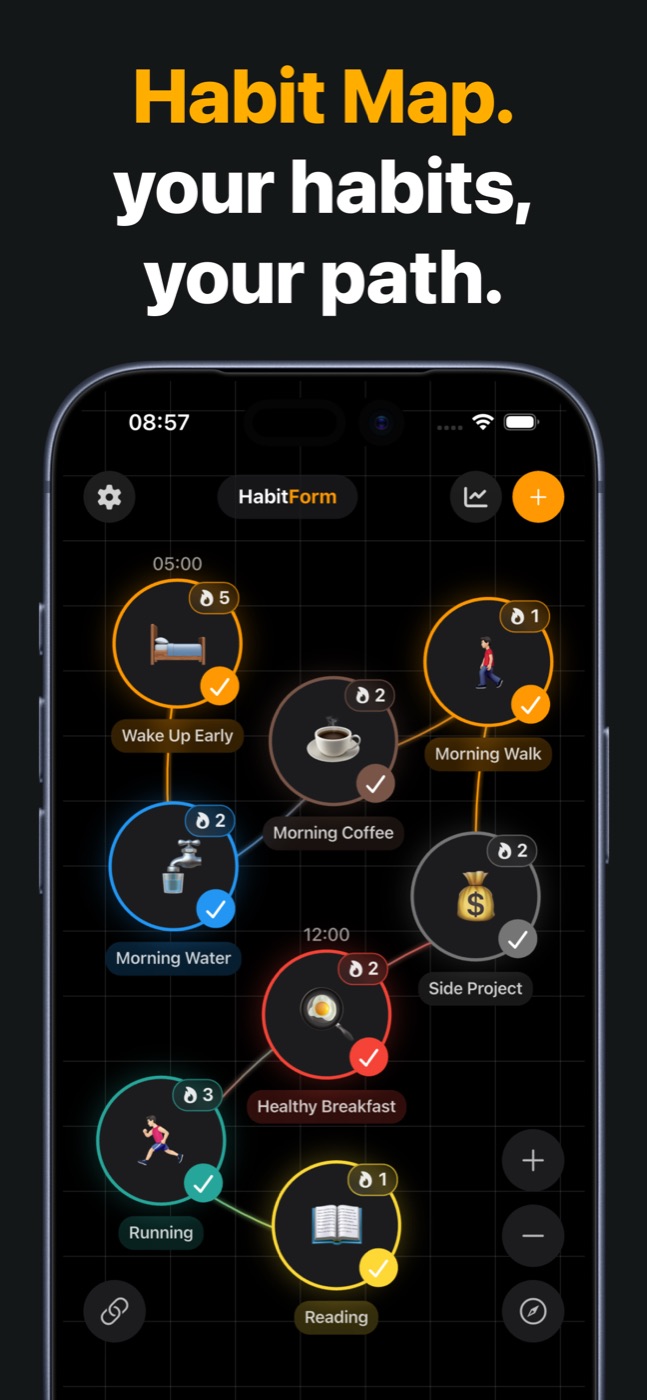
A morning stack might run coffee → water → read one page → plan the day. HabitForm’s visual Habit Map lets you place those habits in their natural order and connect the action that triggers each next step. This makes weak links easier to see than they are in a flat checklist.
Habit stacking FAQ
What does habit stacking mean?
It means attaching a new behavior to a habit you already do every day, so the existing habit acts as the cue: “After I [current habit], I will [new habit].”
Who came up with habit stacking?
The term was popularized by James Clear in Atomic Habits. It builds on research into cue-based planning, often called implementation intentions.
What is the difference between habit stacking and habit bundling?
Stacking links a new habit to an existing cue, one after another. Bundling pairs a behavior you need to do with something you enjoy at the same time.
How many habits should be in a stack?
Start with one existing habit and one new habit. Add another link only after the first pair feels easy for about a week or two.
How long until a habit stack becomes automatic?
There is no fixed number of days. It depends on difficulty, frequency, and context. Read how long it takes to form a habit for the factors that matter.
Map your habit stack
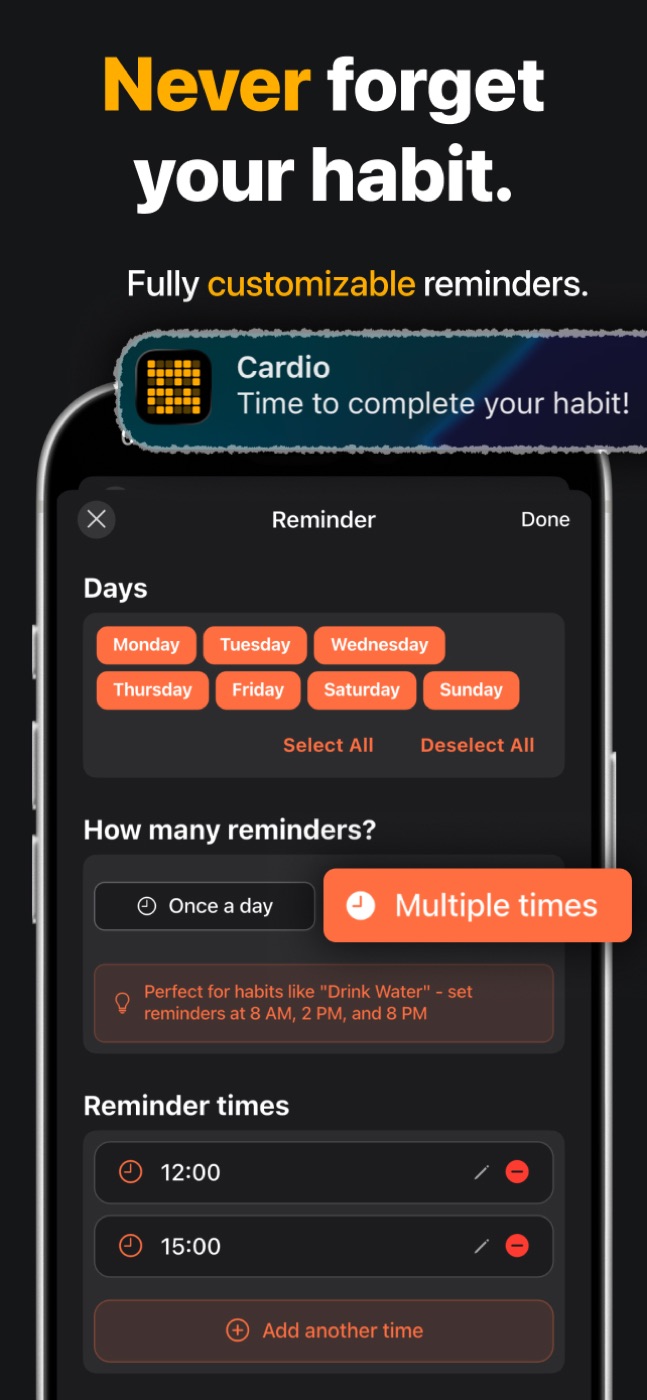
Build a visual routine, add flexible reminders, and track the consistency of every habit in HabitForm.


Keep reading
- Estimate how long your habit may take to become automatic
- How long does it take to form a habit?
- Visual habit tracker: how a habit map shows your routine
- How to choose a habit tracker app you will actually use
Published August 13, 2026 · Updated September 22, 2026 · HabitForm